
Temporada 1 · Coluna Amostra
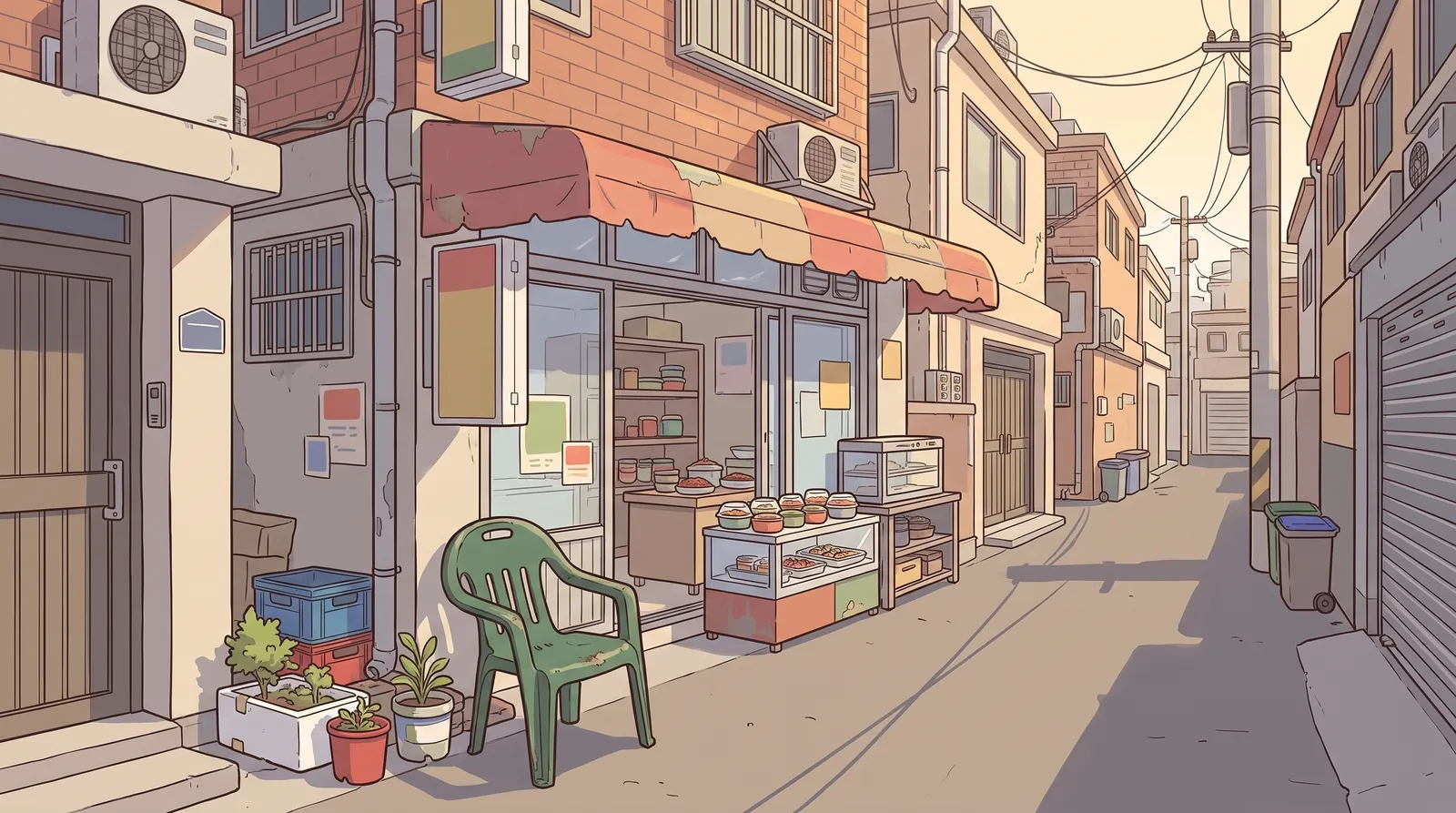
골목의 의자
The Chair in the Alley
여은수 · Yeo Eun-su (neighbourhood columnist)
No que prestar atenção
- 이를테면 · 하물며 · 요컨대 (column markers: example → stronger case → summary)
- 내어 주다 · 머무르다 · 눈치를 보다 (sharing a space)
- -거니와 (remember L5-U05)
- closing with a question to the reader
우리 골목 반찬 가게 앞에는 의자가 하나 있다. 등받이가 조금 기울어진 초록색 플라스틱 의자다. 처음에는 가게 주인이 잠깐 쉬려고 내놓은 것이었다고 한다. 손님이 없는 오후에 주인은 그 의자에 앉아 콩나물을 다듬었고, 지나가는 이웃과 날씨 이야기를 나누었다.
Inglês
In front of the side-dish shop in our alley there is a chair: a green plastic one whose back leans a little. They say the owner first put it out to rest for a moment. On quiet afternoons she sat on it trimming bean sprouts and talked about the weather with passing neighbours.
언제부터인가 그 의자에 다른 사람들이 앉기 시작했다. 장을 보고 돌아가던 어르신이 무거운 봉지를 내려놓고 숨을 고른다. 학원 버스를 기다리는 아이가 신발 끈을 다시 묶는다. 배달을 마친 사람이 물 한 병을 다 마시고 일어선다. 아무도 앉아도 되느냐고 묻지 않았고, 주인도 앉으라고 말한 적이 없다. 그런데도 의자는 어느새 골목 모두의 자리가 되었다.
Inglês
At some point other people began to sit on it. An older neighbour on the way home from the market puts down a heavy bag and catches her breath. A child waiting for the academy bus reties a shoelace. A delivery worker finishes a bottle of water and stands up. Nobody asked whether they could sit, and the owner never told anyone to. Even so, the chair quietly became a seat for the whole alley.
나는 이 의자를 오래 지켜보았다. 흥미로운 것은 의자에 앉는 사람들이 저마다 조금씩 눈치를 본다는 점이다. 앉기 전에 가게 안을 한 번 들여다보고, 주인과 눈이 마주치면 고개를 살짝 숙인다. 오래 앉아 있지도 않는다. 숨을 다 고르면, 아이가 버스에 오르면, 하나둘 자리를 비운다. 마치 빌린 물건을 제때 돌려주듯이.
Inglês
I have watched this chair for a long while. What interests me is that everyone who sits on it reads the room a little. Before sitting they glance into the shop, and if they meet the owner's eyes they give a small nod. Nobody stays long. Once their breath is back, once the child is on the bus, one by one they give up the seat — like returning a borrowed thing on time.
이 장면을 보며 나는 공공 공간이 무엇인지 다시 생각하게 된다. 공공 공간이라고 하면 흔히 넓은 광장이나 공원을 떠올린다. 누구나 들어갈 수 있고 누구의 것도 아닌 자리 말이다. 그러나 골목의 의자는 분명히 가게 주인의 것이다. 주인이 돈을 주고 샀고, 비가 오면 주인이 가게 안으로 들여놓는다. 그런데도 그 의자는 웬만한 광장보다 더 여럿이 함께 쓰는 자리다. 주인은 한 사람이되, 쓰임은 여러 사람에게 열려 있는 것이다.
Inglês
Watching this, I find myself rethinking what a public space is. We usually picture a wide square or a park: a place anyone may enter and no one owns. But the chair in the alley clearly belongs to the shop owner. She paid for it, and when it rains she carries it inside. Even so, more people share it than share many a square. It has one owner, yet its use is open to many.
이를테면 이런 일이 있었다. 어느 날 의자 등받이에 작은 종이가 붙었다. 「잠깐 쉬어 가세요. 오래 앉으실 분은 말씀해 주세요.」 주인의 글씨였다. 나는 그 종이를 보고 조금 서운했다. 누구나 앉던 의자에 조건이 붙은 것 같았기 때문이다. 오래 앉을 사람은 허락을 받으라는 말로 읽혔다.
Inglês
For example, this happened. One day a small note appeared on the back of the chair: “Rest here for a moment. If you would like to sit for a long time, please tell me.” It was the owner's handwriting. Seeing it, I felt a little hurt. It seemed a condition had been put on a chair anyone used to sit on. I read it as “ask permission if you want to stay long.”
나중에 들어 보니 사정은 정반대였다. 한 어르신이 의자에 앉은 채 깜빡 잠이 들었는데, 주인은 그분이 어디가 편찮은 줄 알고 크게 놀랐다고 한다. 종이는 사람을 내보내려는 글이 아니었다. 오래 앉을 사람이 있으면 따뜻한 차라도 한 잔 내어 주겠다는 뜻이었다. 나는 같은 문장을 반대로 읽은 셈이다.
Inglês
Later I heard the story was the very opposite. An older neighbour had dozed off on the chair, and the owner, thinking he was unwell, got a real fright. The note was not meant to send anyone away. It meant: if you are staying a while, I will bring you a cup of something warm. I had read the same sentence the other way round.
의자 하나에도 이렇게 말 없는 약속이 있는데, 하물며 더 큰 공간은 어떨까. 우리 동네에는 주인이 따로 없는 벤치도 여럿 있다. 구청이 놓은 그 벤치들은 누구의 것도 아니어서 누구나 앉을 수 있다. 그런데 정작 그 벤치에서는 이웃끼리 인사를 나누는 모습을 보기 어렵다. 앉은 사람은 휴대 전화를 보고, 옆자리에 누가 앉으면 가방을 무릎 위로 옮긴다. 자리는 열려 있지만 마음까지 열려 있지는 않은 것이다.
Inglês
If a single chair carries such an unspoken agreement, what about bigger spaces? Our neighbourhood also has several benches with no particular owner. Put there by the district office, they belong to no one, so anyone may sit. Yet on those benches you rarely see neighbours greeting each other. People look at their phones, and when someone sits down next to them they move their bag onto their lap. The seats are open, but the hearts are not.
벤치가 잘못되었다는 말이 아니다. 누구의 것도 아닌 자리는 누구에게나 공평하다는 큰 장점이 있다. 주인의 눈치를 볼 필요도 없고, 아는 사람이 없어도 마음 편히 앉을 수 있다. 다만 공평함만으로는 사람과 사람 사이가 가까워지지 않는다. 열린 자리와 열린 마음은 서로 다른 문제인 셈이다.
Inglês
This is not to say the benches are wrong. A seat that belongs to no one has the great merit of being fair to everyone. You need not watch an owner’s face, and you can sit at ease even if you know nobody. It is just that fairness alone does not bring people closer. An open seat and an open heart turn out to be different matters.
반찬 가게의 의자가 다른 까닭은 그 뒤에 사람이 있기 때문이다. 의자에 앉는 사람은 주인의 얼굴을 알고, 주인은 앉는 사람의 사정을 짐작한다. 그 관계가 사람들로 하여금 스스로 오래 앉지 않게 하고, 주인으로 하여금 종이 한 장으로 마음을 전하게 한다. 규칙은 짧지만, 그 규칙을 지키게 하는 것은 서로를 아는 사이다.
Inglês
The side-dish shop's chair is different because there is a person behind it. Those who sit know the owner's face, and the owner can guess their circumstances. That relationship keeps people from sitting too long of their own accord and lets the owner convey her feelings with one sheet of paper. The rule is short, but what keeps it is the fact that people know each other.
한번은 주인에게 의자를 왜 그대로 두느냐고 물어본 적이 있다. 주인은 잠깐 생각하더니, 처음부터 사람들을 위해 내놓은 것은 아니었다고 솔직하게 말했다. 다만 누군가 앉아 있는 모습을 보면 가게 앞이 덜 비어 보여서 좋다고 했다. 의자를 치울까 고민한 날도 있었다고 한다. 비가 그친 뒤에 의자가 젖어 있으면 누가 앉았다가 옷을 버릴까 걱정이 되었기 때문이다. 그래서 요즘은 마른 수건을 하나 의자 다리에 걸어 둔다. 내어 주는 일에도 이렇게 작은 수고가 따른다.
Inglês
Once I asked the owner why she leaves the chair out. She thought for a moment and said frankly that she had not put it out for other people at first. It is just that when someone is sitting there, the front of the shop looks less empty, and she likes that. There were days she thought of taking it in: when the chair was wet after rain, she worried someone would sit and spoil their clothes. So these days she hangs a dry towel on one of its legs. Even offering a seat takes a little effort like this.
물론 이런 자리는 쉽게 사라질 수도 있다. 가게가 문을 닫으면 의자도 함께 들어간다. 주인이 바뀌면 의자가 그대로 놓여 있을지 알 수 없다. 그렇기에 이런 작은 공용 자리는 법이나 제도로 지킬 수 있는 것이 아니다. 그 자리를 내어 주는 사람과 그 자리에 잠깐 머무르는 사람이 함께 지켜 가는 것이다.
Inglês
Of course a seat like this can easily disappear. When the shop closes, the chair goes in too. If the owner changes, nobody knows whether the chair will stay. That is why such small shared seats cannot be protected by law or rules. They are kept by the person who offers the seat and the people who stay on it for a moment, together.
요컨대 골목의 의자가 묻는 것은 누가 앉아도 되느냐가 아니다. 앉았던 사람이 무엇을 남기고 일어서느냐다. 앉았던 자리를 한 번 털어 놓고, 지나가며 고맙다고 한마디 하고, 비가 오면 의자를 가게 안으로 함께 들여놓는 일. 그런 작은 몸짓이 쌓일 때 한 사람의 물건은 동네의 자리가 된다.
Inglês
In short, what the chair in the alley asks is not who may sit on it. It asks what the sitter leaves behind when they get up: brushing off the seat, a word of thanks on the way past, helping carry the chair inside when it rains. When small gestures like these add up, one person's belonging becomes the neighbourhood's seat.
오늘도 그 초록색 의자는 반찬 가게 앞에 놓여 있다. 당신의 골목에도 그런 의자가 있는가. 있다면 당신은 그 의자에서 일어설 때 무엇을 남기는가.
Inglês
Today too the green chair stands in front of the side-dish shop. Is there a chair like it in your alley? If there is, what do you leave behind when you get up from it?
Palavras
- 기울어지다
- to lean, to tilt
- 깜빡
- for a moment (깜빡 잠이 들다 = to doze off)
- 마치
- as if, just like (마치 … 듯이)
- 웬만하다
- fair, ordinary (웬만한 광장 = most squares)
- 하여금
- N(으)로 하여금 V-게 하다 = to make / let N do V (written style)
- 공평하다
- to be fair, even-handed
- 편히
- comfortably, at ease
Perguntas
-
이 의자는 처음에 누가, 왜 내놓았습니까?
Who first put the chair out, and why?
Resposta
가게 주인이 잠깐 쉬려고 내놓았다.
-
의자에 앉는 사람들은 어떻게 눈치를 봅니까? 두 가지를 쓰세요.
How do the people who sit read the room? Give two things.
Resposta
가게 안을 들여다본다 · 주인과 눈이 마주치면 고개를 숙인다 · 오래 앉지 않는다 (이 중 두 가지)
-
필자는 종이에 쓰인 문장을 처음에 어떻게 읽었고, 실제 뜻은 무엇이었습니까?
How did the writer first read the note, and what did it really mean?
Resposta
오래 앉으려면 허락을 받으라는 말로 읽었다 → 오래 앉을 사람에게 따뜻한 차를 내어 주겠다는 뜻이었다.
-
「하물며」 문장은 무엇을 전제로 합니까?
What does the 하물며 sentence take as given?
Resposta
의자 하나에도 말 없는 약속이 있다는 것.
-
구청 벤치와 반찬 가게 의자의 차이를 필자는 무엇이라고 봅니까?
What difference does the writer see between the district benches and the shop chair?
Resposta
의자 뒤에 서로 아는 사람이 있다는 것(관계).
-
이 칼럼의 요지를 한 문장으로 쓰세요.
Write the gist of the column in one sentence.
Resposta
(예) 작은 공용 자리는 법이 아니라 내어 주는 사람과 머무르는 사람의 관계로 지켜진다.
Para conversar
개인의 물건이 여러 사람의 자리가 될 때, 그 경계는 누가 정해야 할까요?
When a private object becomes a shared seat, who should draw the line?
여러분 동네에도 「말 없는 약속」으로 함께 쓰는 자리가 있습니까? 그 약속은 무엇입니까?
Is there a place in your area run by an unspoken agreement? What is the agreement?
Tarefa de escrita
이 칼럼에 대한 반론을 독자 기고(서명한 짧은 논설)로 쓰세요.
Write a counter-argument to this column as a signed reader's opinion piece (not a letter).
Extensão: 400~500자(띄어쓰기 포함)