
Korean grammar · Level 4 · 4급
-(으)ㄴ/는 탓에
Because of (something bad)
탓 means blame, so -(으)ㄴ/는 탓에 gives a cause that led to a bad result. Use -는 탓에 for a verb happening now, -(으)ㄴ 탓에 for a past verb or any adjective, and N 탓에 or N인 탓에 after a noun. For a good result, use 덕분에 instead.
| When | Use | Example |
|---|---|---|
| verb, now | -는 탓에 | 비가 오는 탓에 · 길이 막히는 탓에 |
| verb, past | -(으)ㄴ 탓에 | 늦게 잔 탓에 · 많이 먹은 탓에 |
| adjective | -(으)ㄴ 탓에 | 추운 탓에 · 어려운 탓에 |
| noun | N 탓에 · N인 탓에 | 감기 탓에 · 주말인 탓에 |
Examples
길이 막힌 탓에 수업에 늦었어요.
I was late for class because the roads were jammed.
날씨가 추운 탓에 감기에 걸렸어요.
I caught a cold because of the cold weather.
한자는 배우기 어려운 탓에 글을 아는 사람이 적었다.
Because Chinese characters were hard to learn, few people could read.
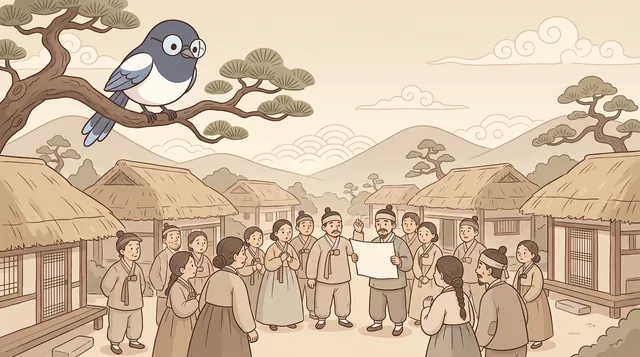
Practise it in context · Level 4, Unit 6
The king who made an alphabet
A dialogue with audio, practice that checks itself, Hoya’s mistakes, a reading and a writing task.
Open the unit →