
Level 1 · Beginner 1 · Unit 10
Let me introduce my family
By the end you can
- Introduce your family
- Talk politely about older people
- Say who you give something to
Part 1
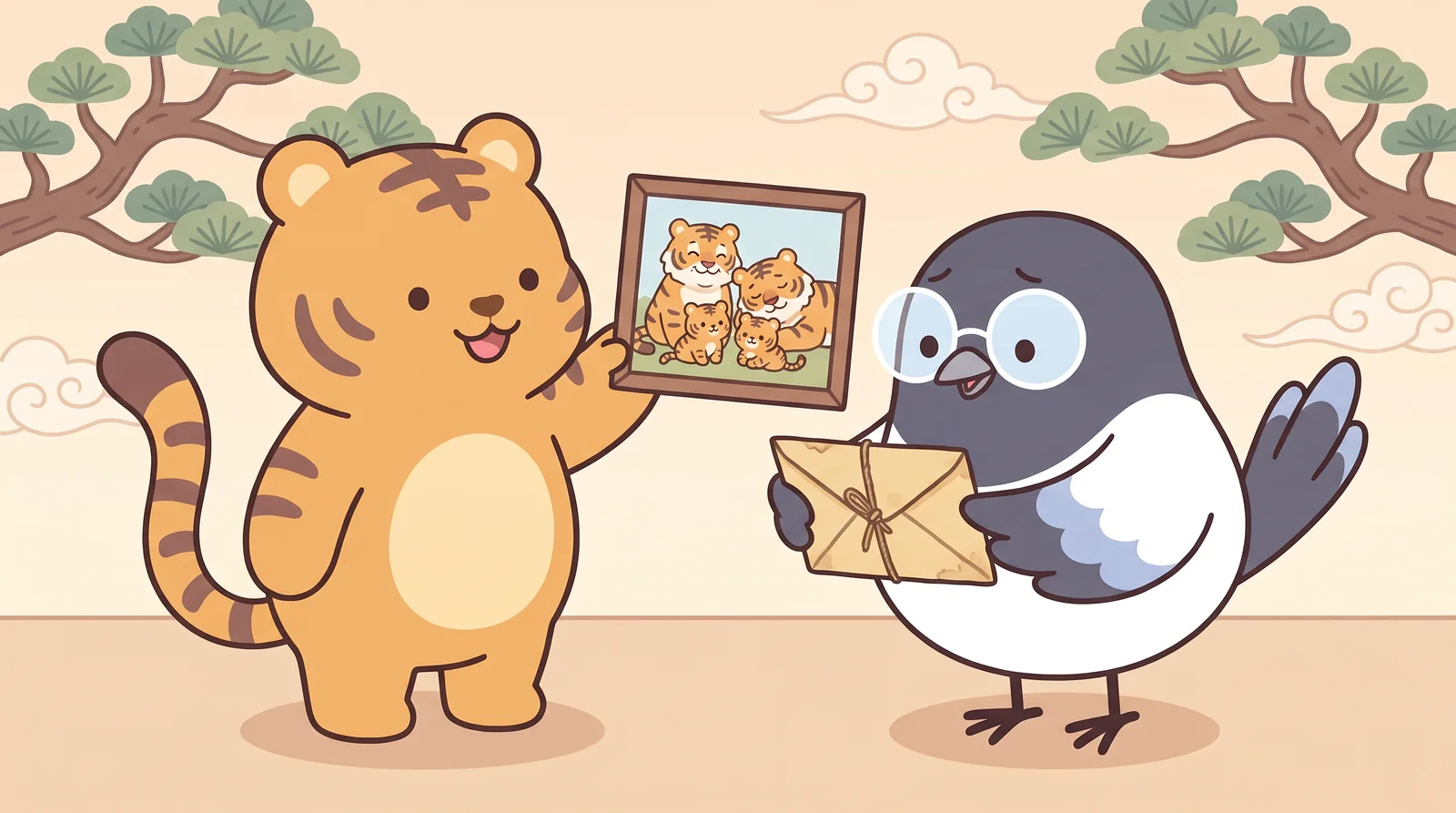
The photo and the envelope
Listen first. Then hide the English and read along. Then use Shadow: Sori or Hoya says a line, you say it back.
-
소리쌤, 이거 우리 가족 사진이에요.
Sori-ssaem, this is a photo of my family.
-
와, 가족이 많아요!
Wow, what a big family!
-
네, 여섯 명이에요. 이분은 우리 할머니세요.
Yes, there are six of us. This is my grandmother.
-
할머니께서는 뭐 하세요?
What does your grandmother do?
-
할머니께서는 매일 산에 가세요. 그리고 호떡을 드세요.
She goes up the mountain every day. And she eats hotteok.
-
호야 씨하고 같아요!
Just like you!
-
이분은 우리 아버지세요. 아버지께서는… 사진에서도 주무세요.
This is my father. He's… asleep even in the photo.
-
그런데 이 편지는 뭐예요?
And what's this letter?
-
증조할머니의 편지예요. 할머니께서 저에게 주셨어요.
It's my great-grandmother's letter. My grandmother gave it to me.
-
증조할머니요?
Your great-grandmother?
-
네. 그런데 저는 아직 다 못 읽어요.
Yes. But I can't read all of it yet.
-
첫 문장을 읽으세요.
Read the first sentence.
-
사랑하는 우리 아이들에게.
“To my dear children,”
-
…호야 씨가 다 읽을 거예요. 천천히요.
…You'll read all of it, Hoya. Slowly.
Part 2
Grammar
4 patterns, each with the rule and examples you can hear.
V/A-(으)시-
Showing respect
When the person doing the action is older or senior — a grandparent, a teacher, a customer — add -(으)시- to the verb. In the 해요 style that gives -(으)세요, the same shape as the polite request in Unit 8; context tells you which it is. The past is -(으)셨어요.
| ends in a vowel | -세요 | 가다 → 가세요 · 보다 → 보세요 |
|---|---|---|
| ends in a consonant | -으세요 | 읽다 → 읽으세요 · 앉다 → 앉으세요 |
| past | -(으)셨어요 | 가셨어요 · 읽으셨어요 |
| nouns | 이세요 / 세요 | 선생님이세요 · 할머니세요 |
할머니께서 매일 산에 가세요.
My grandmother goes up the mountain every day.
아버지는 회사원이세요.
My father is an office worker.
선생님께서 책을 읽으셨어요.
The teacher read the book.
께서 · 께
Respectful particles
For someone you respect, the particles change too. 이/가 becomes 께서, 은/는 becomes 께서는, and 에게 (to) becomes 께.
| subject 이/가 | 께서 | 할머니께서 |
|---|---|---|
| topic 은/는 | 께서는 | 아버지께서는 |
| to someone (에게 · 한테) | 께 | 할머니께 드려요 |
할머니께서 호떡을 드세요.
Grandma is eating hotteok.
아버지께서는 지금 주무세요.
Father is sleeping now.
어머니께 편지를 썼어요.
I wrote a letter to my mother.
계시다 · 드시다 · 주무시다
Special respectful words
A few everyday verbs and nouns have their own respectful versions instead of taking -(으)시-. These are the ones you'll hear every day.
| 있다 (to be somewhere) | 계시다 | 할머니께서 집에 계세요 |
|---|---|---|
| 먹다 · 마시다 | 드시다 | 드세요 · 드셨어요 |
| 자다 | 주무시다 | 주무세요 · 안녕히 주무세요 |
| 주다 (to someone older) | 드리다 | 할머니께 드려요 |
| age · name · home | 연세 · 성함 · 댁 | 성함이 어떻게 되세요? |
할아버지께서는 집에 계세요.
Grandpa is at home.
할머니, 호떡 드세요.
Grandma, have some hotteok.
안녕히 주무세요.
Good night. (to someone older)
성함이 어떻게 되세요?
May I ask your name?
N에게 · N한테
To someone
에게 and 한테 both mean “to” a person or animal. 한테 is more spoken, 에게 is more written. For someone you respect, use 께.
친구에게 선물을 줬어요.
I gave a present to a friend.
동생한테 전화했어요.
I phoned my younger sibling.
할머니께서 저에게 편지를 주셨어요.
My grandmother gave me a letter.
Part 3
Words
29 words. Tap a card to hear it. When you finish, they go into your review — they come back tomorrow.
family
respectful words
other words
Part 4
Practice
Check each answer as you go. Nothing is graded — mistakes are how this works.
Which respectful verb?
-
할아버지께서 지금 ___.
Grandpa is sleeping now.
-
아버지께서 커피를 ___.
Father is drinking coffee.
-
할머니께서 집에 ___.
Grandma is at home.
-
할머니께서 매일 산에 ___.
Grandma goes up the mountain every day.
이/가 or 께서?
-
동생___ 자요.
My younger sibling is sleeping.
-
할머니___ 주무세요.
Grandma is sleeping.
Put the words in order
-
Grandma is at home.
-
I gave a present to a friend.
-
It's a photo of my family.
Choose the right answer
-
성함이 어떻게 되세요?
May I ask your name?
-
할아버지께서 뭐 하세요?
What is your grandfather doing?
Part 5
Fix Hoya’s mistakes
Hoya wrote these. Each has one mistake — the kind a sensible learner makes. Say the fixed sentence before you check.
-
Say “Grandma is eating”.
Hoya wrote 할머니가 먹어요.
Show the fix
할머니께서 드세요.
For older family, use 께서 instead of 이/가 and the respectful verb 드시다 instead of 먹다.
-
Ask an older person's name.
Hoya wrote 이름이 뭐예요?
Show the fix
성함이 어떻게 되세요?
이름이 뭐예요? is fine with people your age. With someone older, use 성함 and 어떻게 되세요.
-
Say good night to Grandpa.
Hoya wrote 할아버지, 안녕히 자요.
Show the fix
할아버지, 안녕히 주무세요.
자다 becomes 주무시다 for someone older.
Part 6
Hoya's family
Hoya writes about the photo for Sori. The last line is the first line of a very old letter. Read it yourself first; tap a line to see its meaning, or listen to Hoya read it.
There are six people in my family.
My grandmother, father, mother, older sister, younger brother, and me.
My grandmother goes up the mountain every day.
My father is asleep even in the photo.
My grandmother gave me my great-grandmother's letter.
The letter's first sentence is this: “To my dear children,”
Check your reading
-
How many people are in Hoya's family?
-
Who gave Hoya the letter?
Part 7
Writing
Introduce your family in five sentences.
See Sori’s model answer
- 우리 가족은 네 명이에요. There are four people in my family.
- 아버지, 어머니, 여동생, 그리고 저예요. My father, mother, younger sister and me.
- 아버지께서는 회사원이세요. My father is an office worker.
- 어머니께서는 요리를 좋아하세요. My mother likes cooking.
- 여동생은 대학생이에요. My younger sister is a university student.

Unit 10 complete
Finish every part above, then mark the unit complete. Your words come back in Review tomorrow.