
Level 1 · Beginner 1 · Unit 1
Hello, I'm Hoya
By the end you can
- Greet people and say goodbye
- Say your name, nationality and job
- Ask someone's name and country
Part 1
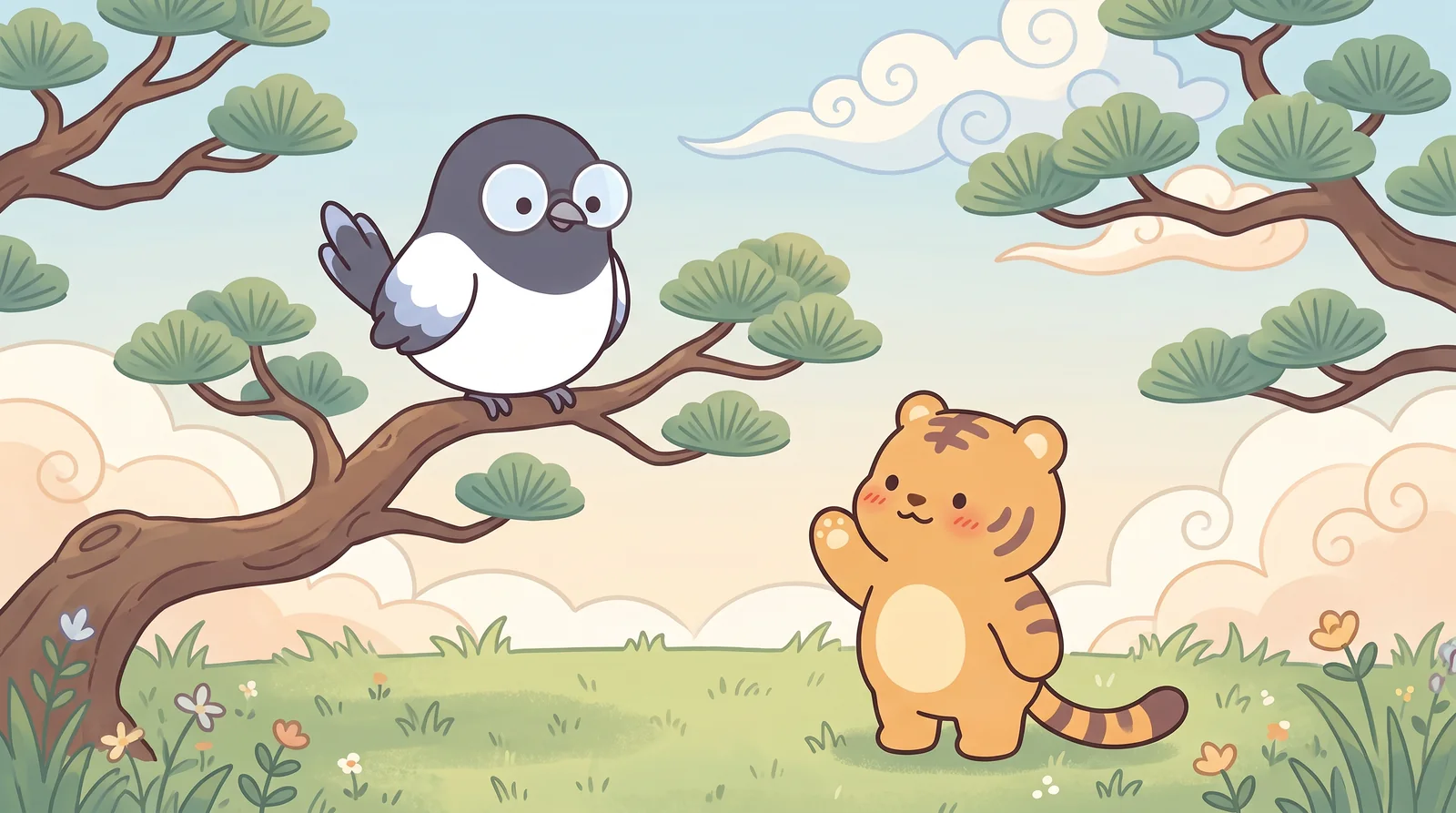
Under the pine tree
Listen first. Then hide the English and read along. Then use Shadow: Sori or Hoya says a line, you say it back.
-

안녕하세요!
Hello!
-
안녕하세요. 저는 소리예요.
Hello. I'm Sori.
-
저는 호야예요. 반갑습니다.
I'm Hoya. Nice to meet you.
-
반가워요. 호야 씨는 학생이에요?
Nice to meet you. Are you a student, Hoya?
-
네, 학생이에요. 소리 씨도 학생이에요?
Yes, I'm a student. Are you a student too, Sori?
-
아니요, 저는 학생이 아니에요. 선생님이에요.
No, I'm not a student. I'm a teacher.
-
아, 선생님! 그럼 소리 선생님이에요?
Oh, a teacher! So you're Teacher Sori?
-
네. 그냥 소리쌤이에요.
Yes. Just Sori-ssaem is fine.
-
호야 씨는 어느 나라 사람이에요?
Which country are you from, Hoya?
-
저는… 호랑이예요.
I'm… a tiger.
-
네, 알아요.
Yes. I know.
Part 2
Grammar
5 patterns, each with the rule and examples you can hear.
N은/는
The topic marker
은/는 marks what the sentence is about — think "as for…". Use 은 after a noun that ends in a consonant and 는 after a noun that ends in a vowel.
| ends in a consonant | 은 | 선생님은 |
|---|---|---|
| ends in a vowel | 는 | 저는 · 호야는 |
저는 호야예요.
I'm Hoya.
소리 씨는 선생님이에요.
Sori is a teacher.
선생님은 한국 사람이에요.
The teacher is Korean.
N이에요/예요
“to be”
Korean puts “is / am / are” at the end, attached to the noun. Use 이에요 after a consonant and 예요 after a vowel. The question is the same sentence with your voice going up at the end.
| ends in a consonant | 이에요 | 학생이에요 · 선생님이에요 |
|---|---|---|
| ends in a vowel | 예요 | 호야예요 · 의사예요 |
저는 학생이에요.
I'm a student.
소리 씨는 선생님이에요.
Sori is a teacher.
호야 씨는 가수예요?
Are you a singer, Hoya?
N이/가 아니에요
“is not”
To say something is not something, put 이 or 가 on the noun and add 아니에요. 이 after a consonant, 가 after a vowel. The spelling is 아니에요 — never 아니예요.
| ends in a consonant | 이 아니에요 | 학생이 아니에요 |
|---|---|---|
| ends in a vowel | 가 아니에요 | 의사가 아니에요 |
저는 학생이 아니에요.
I'm not a student.
호야 씨는 의사가 아니에요.
Hoya is not a doctor.
소리 씨는 한국 사람이 아니에요?
Isn't Sori Korean?
네 / 아니요
Yes and no
네 means yes; 아니요 means no. 네 also means “I see” or “I'm listening”, so you will hear it constantly in conversation.
네, 학생이에요.
Yes, I'm a student.
아니요, 선생님이 아니에요.
No, I'm not a teacher.
어느 나라 사람이에요?
Where are you from?
Literally “which country person are you?”. Answer with the country and 사람이에요: 미국 사람이에요 — “I'm American”.
어느 나라 사람이에요?
Which country are you from?
저는 베트남 사람이에요.
I'm Vietnamese.
소리 씨는 한국 사람이에요.
Sori is Korean.
Part 3
Words
32 words. Tap a card to hear it. When you finish, they go into your review — they come back tomorrow.
expressions
people
jobs
countries
Part 4
Practice
Check each answer as you go. Nothing is graded — mistakes are how this works.
은 or 는?
-
저___ 호야예요.
I'm Hoya.
-
선생님___ 한국 사람이에요.
The teacher is Korean.
-
소리 씨___ 선생님이에요.
Sori is a teacher.
-
회사원___ 미국 사람이에요.
The office worker is American.
이에요 or 예요?
-
저는 학생___.
I'm a student.
-
호야 씨는 가수___?
Is Hoya a singer?
-
소리 씨는 선생님___.
Sori is a teacher.
-
저는 요리사___.
I'm a cook.
이 or 가?
-
저는 의사___ 아니에요.
I'm not a doctor.
-
소리 씨는 학생___ 아니에요.
Sori is not a student.
-
호야 씨는 한국 사람___ 아니에요.
Hoya is not Korean.
Put the words in order
-
I'm Vietnamese.
-
Sori is not a student.
-
Which country are you from?
Choose the right answer
-
호야 씨는 선생님이에요?
Is Hoya a teacher?
-
소리 씨는 어느 나라 사람이에요?
Which country is Sori from?
Part 5
Fix Hoya’s mistakes
Hoya wrote these. Each has one mistake — the kind a sensible learner makes. Say the fixed sentence before you check.
-

Say “I'm Hoya”.
Hoya wrote 저는 호야이에요.
Show the fix
저는 호야예요.
호야 ends in a vowel, so it takes 예요. 이에요 is for nouns that end in a consonant.
-
Say “I'm not a student”.
Hoya wrote 저는 학생이 아니예요.
Show the fix
저는 학생이 아니에요.
아니 ends in a vowel, so 예요 looks right — but this one word is always spelled 아니에요. Even Koreans get it wrong.
-
Say “Sori is a teacher”.
Hoya wrote 소리 씨은 선생님이에요.
Show the fix
소리 씨는 선생님이에요.
The topic marker goes on 씨, and 씨 ends in a vowel: 씨는.
Part 6
Hoya's diary
Hoya writes his first three lines of Korean. Then three more. Read it yourself first; tap a line to see its meaning, or listen to Hoya read it.
I'm Hoya.
I'm a student.
I'm not Korean.
Sori is a teacher.
Sori is a magpie.
Sori is a Korean magpie.
Check your reading
-
Is Hoya a teacher?
-
Where is Sori from?
Part 7
Writing
Introduce yourself in three sentences — your name, your country and your job.
See Sori’s model answer
- 안녕하세요. 저는 에밀리예요. Hello. I'm Emily.
- 저는 캐나다 사람이에요. I'm Canadian.
- 저는 회사원이에요. I'm an office worker.

Unit 1 complete
Finish every part above, then mark the unit complete. Your words come back in Review tomorrow.