
Level 1 · Beginner 1 · Unit 7
What did you do yesterday?
By the end you can
- Talk about what you did
- Say what you didn't do
- Link two sentences
Part 1
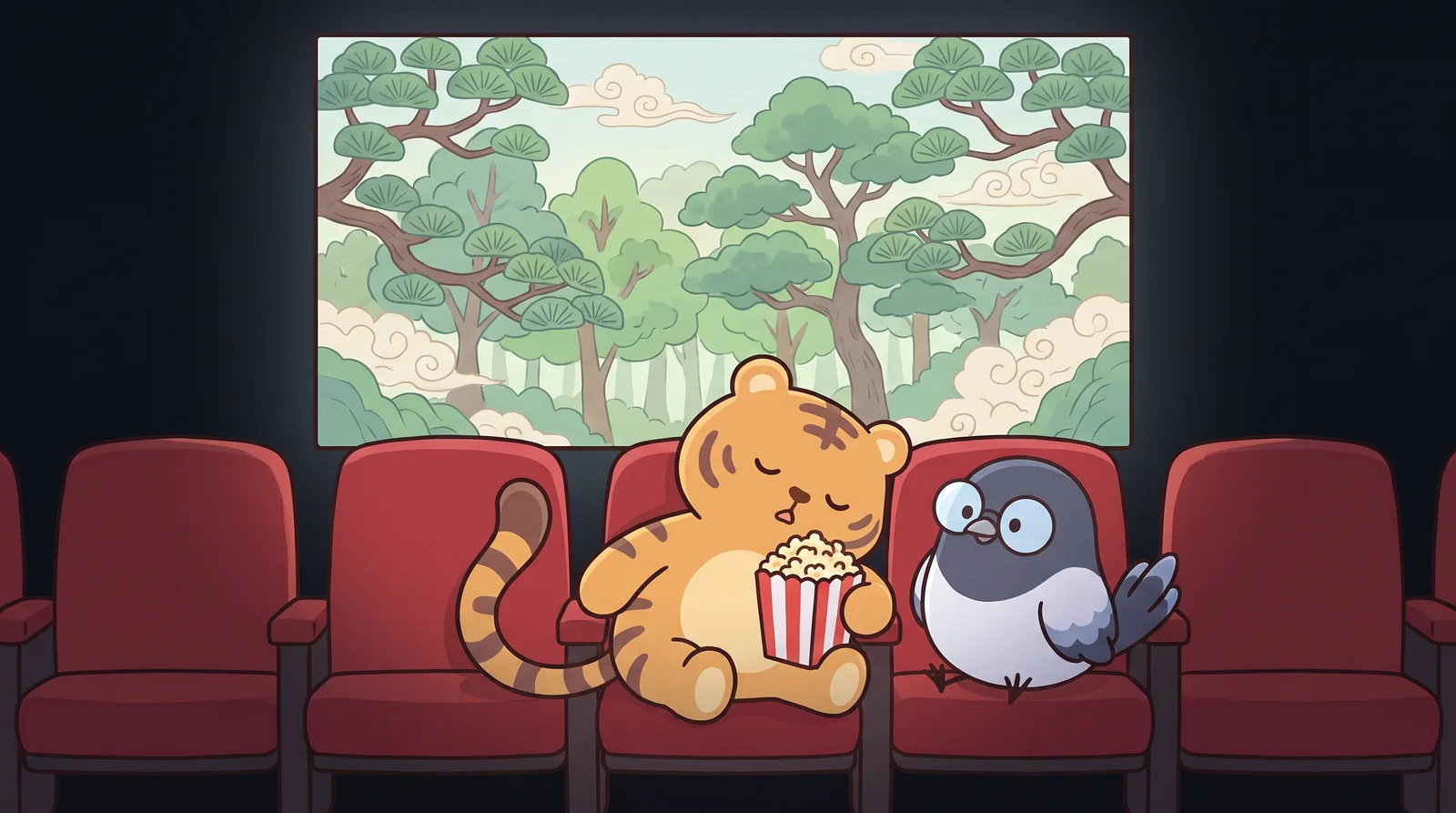
The tiger film with no tiger
Listen first. Then hide the English and read along. Then use Shadow: Sori or Hoya says a line, you say it back.
-

호야 씨, 주말에 뭐 했어요?
Hoya, what did you do at the weekend?
-

토요일에 영화를 봤어요.
I saw a film on Saturday.
-
무슨 영화를 봤어요?
What film did you see?
-
호랑이 영화요! 그런데 영화에 호랑이가 없었어요.
A tiger film! But there was no tiger in it.
-
호랑이 영화에 호랑이가 없었어요?
There was no tiger in the tiger film?
-
네. 그래서 영화관에서 잤어요.
No. So I slept in the cinema.
-
일요일에는요?
And on Sunday?
-
일요일에는 공부했어요. 그리고 운동도 했어요.
On Sunday I studied. And I exercised too.
-
정말요?
Really?
-
아니요… 공부 안 했어요. 운동도 안 했어요.
No… I didn't study. I didn't exercise either.
-
그럼 뭐 했어요?
Then what did you do?
-
호떡을 먹었어요. 세 개 먹었어요.
I ate hotteok. I ate three.
-
세 개요? 저도 호떡 좋아해요!
Three? I like hotteok too!
Part 2
Grammar
4 patterns, each with the rule and examples you can hear.
V/A-았/었어요
The past
The past works like -아요/어요 from Unit 4. Look at the last vowel of the stem: ㅏ or ㅗ takes -았어요, anything else takes -었어요, and every 하다 verb becomes 했어요. The same vowel merges happen: 가다 → 갔어요, 마시다 → 마셨어요.
| last vowel ㅏ or ㅗ | -았어요 | 가다 → 갔어요 · 보다 → 봤어요 |
|---|---|---|
| any other vowel | -었어요 | 먹다 → 먹었어요 · 마시다 → 마셨어요 |
| 하다 verbs | 했어요 | 공부하다 → 공부했어요 |
| nouns | 이었어요 / 였어요 | 학생이었어요 · 의사였어요 |
어제 친구를 만났어요.
I met a friend yesterday.
주말에 영화를 봤어요.
I saw a film at the weekend.
아침에 커피를 마셨어요.
I drank coffee this morning.
안 V/A
Not
Put 안 right before the verb to make it negative. With noun + 하다 verbs, 안 slips in between: 공부 안 해요. (좋아하다 is one word, so it's 안 좋아해요.)
| most verbs and adjectives | 안 + verb | 안 가요 · 안 먹었어요 |
|---|---|---|
| noun + 하다 verbs | noun + 안 + 하다 | 공부 안 해요 · 운동 안 했어요 |
오늘은 학교에 안 가요.
I'm not going to school today.
저는 고기를 안 먹어요.
I don't eat meat.
어제 운동 안 했어요.
I didn't exercise yesterday.
N도
Too, also, either
도 means “too”, and with a negative, “either”. It replaces 이/가, 은/는 and 을/를 — never sits on top of them. After 에 or 에서 it is added: 카페에서도.
| replaces 이/가, 은/는, 을/를 | 도 | 저도 · 커피도 마셔요 |
|---|---|---|
| after 에 / 에서 | 에도 · 에서도 | 카페에서도 자요 |
저도 학생이에요.
I'm a student too.
커피도 마셨어요.
I drank coffee too.
운동도 안 했어요.
I didn't exercise either.
그리고 · 그래서 · 그런데
And, so, but
Three words that start the next sentence and tell the listener how it connects. 그리고 adds, 그래서 gives a result, 그런데 turns against what came before.
| adding | 그리고 — and | 밥을 먹었어요. 그리고 커피를 마셨어요. |
|---|---|---|
| result | 그래서 — so | 피곤했어요. 그래서 잤어요. |
| contrast | 그런데 — but | 영화를 봤어요. 그런데 재미없었어요. |
영화를 봤어요. 그런데 호랑이가 없었어요.
I saw a film. But there was no tiger.
피곤했어요. 그래서 일찍 잤어요.
I was tired. So I went to bed early.
Part 3
Words
25 words. Tap a card to hear it. When you finish, they go into your review — they come back tomorrow.
the past
weekend
how it was
linking
Part 4
Practice
Check each answer as you go. Nothing is graded — mistakes are how this works.
Make it past
-
어제 친구를 ___.
I met a friend yesterday.
-
주말에 공부___.
I studied at the weekend.
-
커피를 ___.
I drank coffee.
-
영화를 ___.
I saw a film.
Where does 안 go?
-
어제 ___.
I didn't exercise yesterday.
-
저는 고기를 ___.
I don't eat meat.
그리고, 그래서 or 그런데?
-
피곤했어요. ___ 일찍 잤어요.
I was tired. So I went to bed early.
-
영화를 봤어요. ___ 재미없었어요.
I saw a film. But it was boring.
-
밥을 먹었어요. ___ 커피를 마셨어요.
I ate. And then I had coffee.
Put the words in order
-
I saw a film at the weekend.
-
I didn't study.
-
I'm a student too.
Choose the right answer
-
어제 뭐 했어요?
What did you do yesterday?
-
주말에 운동했어요?
Did you exercise at the weekend?
Part 5
Fix Hoya’s mistakes
Hoya wrote these. Each has one mistake — the kind a sensible learner makes. Say the fixed sentence before you check.
-

Say “I studied”.
Hoya wrote 공부하었어요.
Show the fix
공부했어요.
하다 always becomes 했어요 in the past.
-
Sori says she likes hotteok. Say “Me too”.
Hoya wrote 저는도요.
Show the fix
저도요.
도 replaces 은/는. It never sits on top of it.
-
Say “I didn't exercise”.
Hoya wrote 안 운동했어요.
Show the fix
운동 안 했어요.
With noun + 하다 verbs, 안 goes right before 하다.
Part 6
Hoya's weekend diary
Sori asked for three sentences about the weekend. Hoya wrote seven. Read it yourself first; tap a line to see its meaning, or listen to Hoya read it.
On Saturday I went to the cinema.
I saw a tiger film.
But there was no tiger in the film.
So I slept in the cinema.
On Sunday I didn't study.
I ate three hotteok.
The hotteok was really good!
Check your reading
-
Was there a tiger in the film?
-
What did Hoya do on Sunday?
Part 7
Writing
Write about what you did last weekend.
See Sori’s model answer
- 토요일에 친구를 만났어요. On Saturday I met a friend.
- 카페에서 커피를 마셨어요. We had coffee at a café.
- 그리고 공원에서 산책했어요. And we took a walk in the park.
- 일요일에는 집에서 쉬었어요. On Sunday I rested at home.
- 청소는 안 했어요. I didn't clean.

Unit 7 complete
Finish every part above, then mark the unit complete. Your words come back in Review tomorrow.