
Level 1 · Beginner 1 · Unit 6
What time is it?
By the end you can
- Tell the time
- Say days and dates
- Say when something happens
Part 1
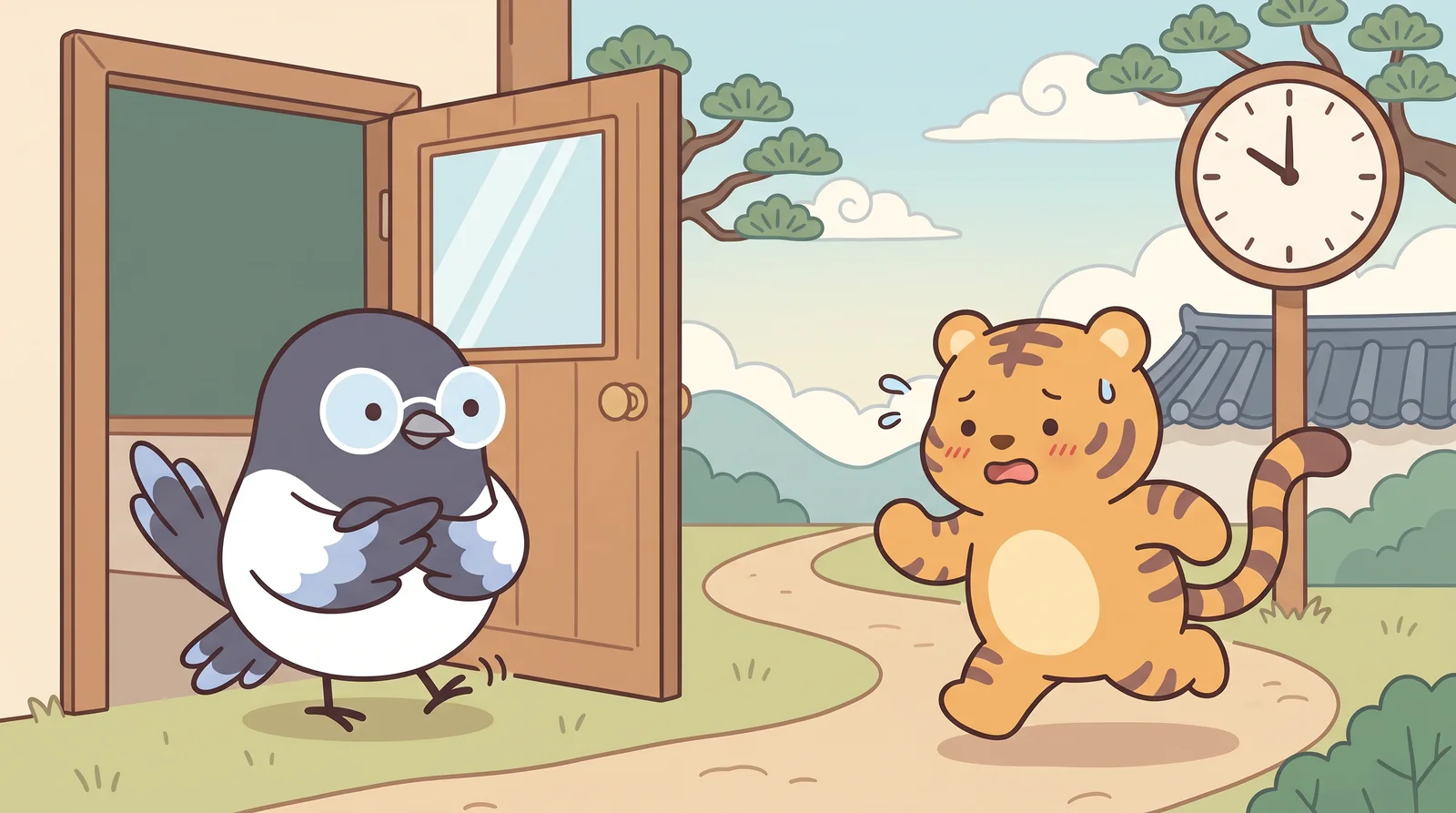
Hoya is late for class
Listen first. Then hide the English and read along. Then use Shadow: Sori or Hoya says a line, you say it back.
-

호야 씨, 지금 몇 시예요?
Hoya, what time is it now?
-

음… 아홉 시 오십 분이에요.
Um… it's 9:50.
-
수업이 몇 시에 있어요?
What time is class?
-
열 시에 있어요.
It's at ten.
-
오늘 무슨 요일이에요?
What day is it today?
-
월요일이에요. 아! 월요일 수업은 아홉 시부터예요!
It's Monday. Oh! Monday's class starts at nine!
-
네. 아홉 시부터 열두 시까지예요.
Yes. From nine to twelve.
-
소리쌤, 죄송해요…
Sori-ssaem, I'm sorry…
-
괜찮아요. 내일은 화요일이에요. 화요일 수업은 열 시에 시작해요.
It's all right. Tomorrow is Tuesday. Tuesday's class starts at ten.
-
내일 열 시에 와요!
I'll come at ten tomorrow!
-
아홉 시 오십 분에 오세요.
Come at 9:50.
Part 2
Grammar
5 patterns, each with the rule and examples you can hear.
N시 (native) + N분 (Sino-Korean)
Telling the time
Hours use the native numbers you counted apples with; minutes use the Sino-Korean numbers you paid with. So 3:15 is 세 시 십오 분. Half past is 반.
| hours — native numbers | 한 시 · 두 시 … 열두 시 | 세 시 · 열한 시 |
|---|---|---|
| minutes — Sino-Korean numbers | 일 분 … 오십구 분 | 십 분 · 사십오 분 |
| half past | 반 | 두 시 반 = 2:30 |
| a.m. / p.m. | 오전 · 오후 | 오후 세 시 = 3 p.m. |
지금 몇 시예요?
What time is it now?
세 시 십오 분이에요.
It's 3:15.
오후 두 시 반이에요.
It's 2:30 p.m.
N에 (time)
At a time, on a day
에 after a clock time, a day or a part of the day means “at / on / in”. Four words never take it: 오늘 (today), 내일 (tomorrow), 어제 (yesterday) and 지금 (now).
| clock times, days, parts of the day | 에 | 세 시에 · 월요일에 · 아침에 |
|---|---|---|
| today, tomorrow, yesterday, now | no 에 | 내일 가요 · 지금 가요 |
여덟 시에 일어나요.
I get up at eight.
토요일에 친구를 만나요.
I meet a friend on Saturday.
내일 학교에 가요.
I go to school tomorrow.
몇 · 무슨 · 언제
Which number, what kind, when
몇 asks for a number (몇 시 — what time, 몇 개 — how many). 무슨 asks what kind (무슨 요일 — what day, 무슨 책 — what book). 언제 is “when”.
몇 시에 만나요?
What time shall we meet?
오늘 무슨 요일이에요?
What day is it today?
생일이 언제예요?
When is your birthday?
N월 N일 · N요일
Dates and days
Months and dates use Sino-Korean numbers: 삼월 오일 is March 5th. Two months change shape: 6월 is 유월 and 10월 is 시월. Days of the week are one syllable each plus 요일.
| months | number + 월 | 삼월 · 유월 (6) · 시월 (10) |
|---|---|---|
| dates | number + 일 | 오월 오일 = May 5th |
| days of the week | 월 · 화 · 수 · 목 · 금 · 토 · 일 + 요일 | 월요일 · 금요일 |
오늘은 시월 구일이에요.
Today is October 9th.
제 생일은 유월 이십일이에요.
My birthday is June 20th.
금요일에 만나요.
See you on Friday.
N부터 N까지
From … to …
부터 marks when something starts and 까지 when it ends. Either one can also stand alone: 열두 시까지 — until twelve.
아홉 시부터 열두 시까지 수업이 있어요.
I have class from nine to twelve.
월요일부터 금요일까지 일해요.
I work Monday to Friday.
몇 시까지 해요?
Until what time are you open?
Part 3
Words
30 words. Tap a card to hear it. When you finish, they go into your review — they come back tomorrow.
time
days
dates
questions
school
Part 4
Practice
Check each answer as you go. Nothing is graded — mistakes are how this works.
Which number?
-
(3:00) ___ 시예요.
It's three o'clock.
-
(3:10) 세 시 ___ 분이에요.
It's 3:10.
-
(June) ___이에요.
It's June.
-
(October) ___이에요.
It's October.
에 or not?
-
___ 친구를 만나요.
I'm meeting a friend tomorrow.
-
___ 일어나요.
I get up at seven.
-
___ 운동해요.
I exercise on Saturday.
몇, 무슨 or 언제?
-
오늘 ___ 요일이에요?
What day is it today?
-
지금 ___ 시예요?
What time is it now?
-
생일이 ___예요?
When is your birthday?
Put the words in order
-
See you tomorrow at three.
-
I have class from nine to twelve.
Choose the right answer
-
지금 몇 시예요?
What time is it now?
-
생일이 언제예요?
When is your birthday?
Part 5
Fix Hoya’s mistakes
Hoya wrote these. Each has one mistake — the kind a sensible learner makes. Say the fixed sentence before you check.
-

Say “It's June”.
Hoya wrote 육월이에요.
Show the fix
유월이에요.
Two months change their sound: 6월 is 유월 and 10월 is 시월. The final consonant drops.
-
Say “It's ten o'clock”.
Hoya wrote 십 시예요.
Show the fix
열 시예요.
Hours use native numbers: 열 시. Minutes use Sino-Korean: 십 분.
-
Say “See you tomorrow”.
Hoya wrote 내일에 만나요.
Show the fix
내일 만나요.
오늘, 내일, 어제 and 지금 never take 에.
Part 6
Hoya's week
Hoya copies his timetable into his notebook — with a few notes of his own. Read it yourself first; tap a line to see its meaning, or listen to Hoya read it.
I have Korean class from Monday to Friday.
Monday's class starts at nine.
From Tuesday to Friday it starts at ten.
Class ends at twelve.
On Saturday I go to the market. There's hotteok.
On Sunday I sleep all day.
Check your reading
-
What time does Monday's class start?
-
What does Hoya do on Sunday?
Part 7
Writing
Write your schedule for this week.
See Sori’s model answer
- 저는 월요일부터 금요일까지 일해요. I work Monday to Friday.
- 아침 여덟 시에 회사에 가요. I go to work at eight in the morning.
- 수요일 저녁에 운동해요. I exercise on Wednesday evening.
- 토요일에 친구를 만나요. I meet a friend on Saturday.
- 일요일에 집에서 쉬어요. I rest at home on Sunday.

Unit 6 complete
Finish every part above, then mark the unit complete. Your words come back in Review tomorrow.