
- My course
- Level 1
Level 1 · 초급 1
Level 1: Beginner 1
Introduce yourself, talk about things, places and your day, count, tell the time, shop, and make simple plans in polite Korean (해요체).
- 14 units (2 from the Speech Room)
- 53 grammar patterns
- 420 words
-

Unit 1
Hello, I'm Hoya
Under the pine tree
N은/는 · N이에요/예요 · N이/가 아니에요 · 네 / 아니요 · 어느 나라 사람이에요?
Open now -

Unit 2
What is this?
Everything in Hoya's bag
이거 · 그거 · 저거 (이/그/저 + N) · N이/가 뭐예요? · 누구예요? · N이/가 있어요 · 없어요 · N의 · 제 · 내 · 누구 N
Open now -
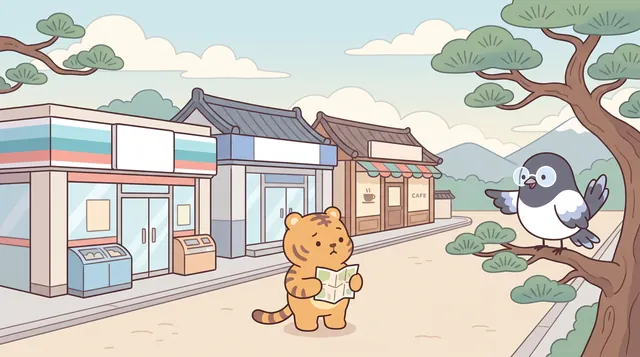
Unit 3
Where is it?
Where is everything?
N에 있어요 / 없어요 · 앞 · 뒤 · 옆 · 위 · 아래 · 안 · 밖 · 사이 · 여기 · 거기 · 저기 · N이/가 어디예요? · 어디에 있어요?
Open now -

Unit 4
Doing things: polite present (1)
Hoya's study routine
V/A-아요/어요 · 하다 → 해요 · N을/를 · 안 V/A
Open now -
Unit 5
Going and doing: polite present (2)
Where are you going today?
N에 가요 / 와요 · N에서 (place of action) · N도
Preview -

Unit 6
How much is it?
How much is it?
일 · 이 · 삼 … 십 (0–99) · 백 · 천 · 만 (100–999,999) · N원 · 얼마예요? · N 주세요
Preview -

Unit 7
Counting things
Hotteok for two
하나 · 둘 · 셋 … 열 · 열하나 … 열아홉 · N + number + counter (개 · 명 · 잔 · 병 · 마리) · 몇 · N하고 N · N와/과 N · N(이)랑 N
Preview -
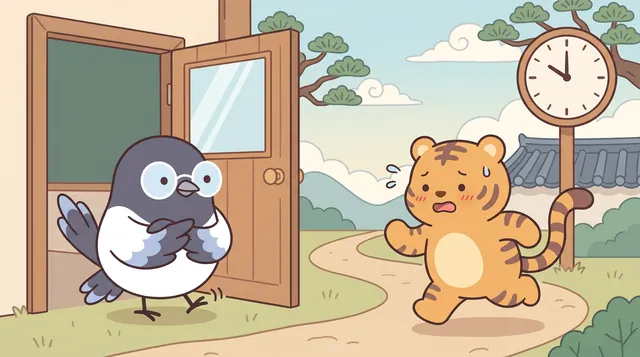
Unit 8
What time is it?
A plan for tomorrow
N시 (native) + N분 (Sino-Korean) · 반 · 전 · 오전/오후 · N에 (time) · 오늘/내일/어제/지금/언제 + no 에 · 몇 · 무슨 · 언제 · 며칠 · N월 N일 · N요일 · N부터 N까지
Preview -

Unit 9
What did you do yesterday?
The tiger film with no tiger
V/A-았/었어요 · N이었어요/였어요 · N이/가 아니었어요 · 그리고 · 그래서 · 그런데 · 안 V · N도 (review)
Preview -

Speech Room · Unit 1
Formal style 1: -(스)ㅂ니다
Hoya practises a formal introduction
V/A-(스)ㅂ니다 · -(스)ㅂ니까? · N입니다 · N입니까? · N이/가 아닙니다 · 네, ~ㅂ니다 · 아니요, ~ · 합니다체 vs 해요체
Preview -

Unit 10
I want to eat bibimbap
Hoya's first Korean restaurant
V-고 싶어요 · V-(으)ㄹ까요? · N하고 (같이)
Preview -
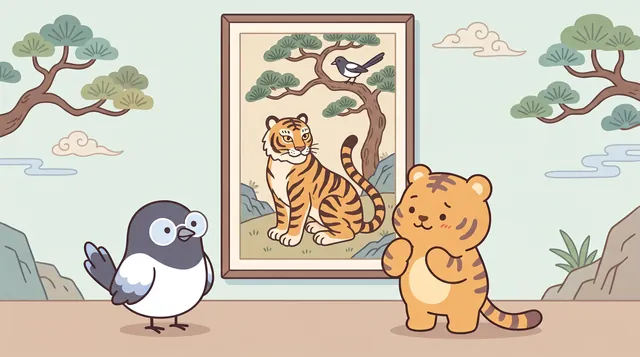
Unit 11
What will you do this weekend?
Weekend plans at the museum
V-(으)ㄹ 거예요 · V-(으)러 가요 / 와요 · V-고 · 못 V · V-지 못해요 / 안 V · V-지 않아요
Preview -

Unit 12 · Part 1 of the letter
My family and other people
The photo and the envelope
N에게 · N한테 · N께 · N명 · N분 · N의 N · N만 · N밖에 + negative
Preview -

Speech Room · Unit 2
Honorifics 1: -(으)시-
Grandmother at the pine tree
V/A-(으)시- · V-(으)세요 · N이세요 · N세요 · V/A-(으)셨어요 · -(으)실 거예요
Preview
What you can do after Level 1
- Introduce yourself — name, country, job — and ask others.
- Say what something is, whose it is, and whether it is there.
- Say where people, things and places are, with position words.
- Talk about what you do and don't do every day, and where you go to do it.
- Ask prices in a shop, and count things and people (both number sets, counters).
- Tell the time, the date and the day, and say from when to when.
- Say what you did yesterday or last weekend, linking with 그리고 · 그래서 · 그런데.
- Say what you want to do, suggest doing something together, give weekend plans and say what you can't do.
- Introduce your family, say who you give things to, and say “only” (만 · 밖에).
- Give a short formal self-introduction in 합니다체, and use -(으)시- when talking about teachers and elders.